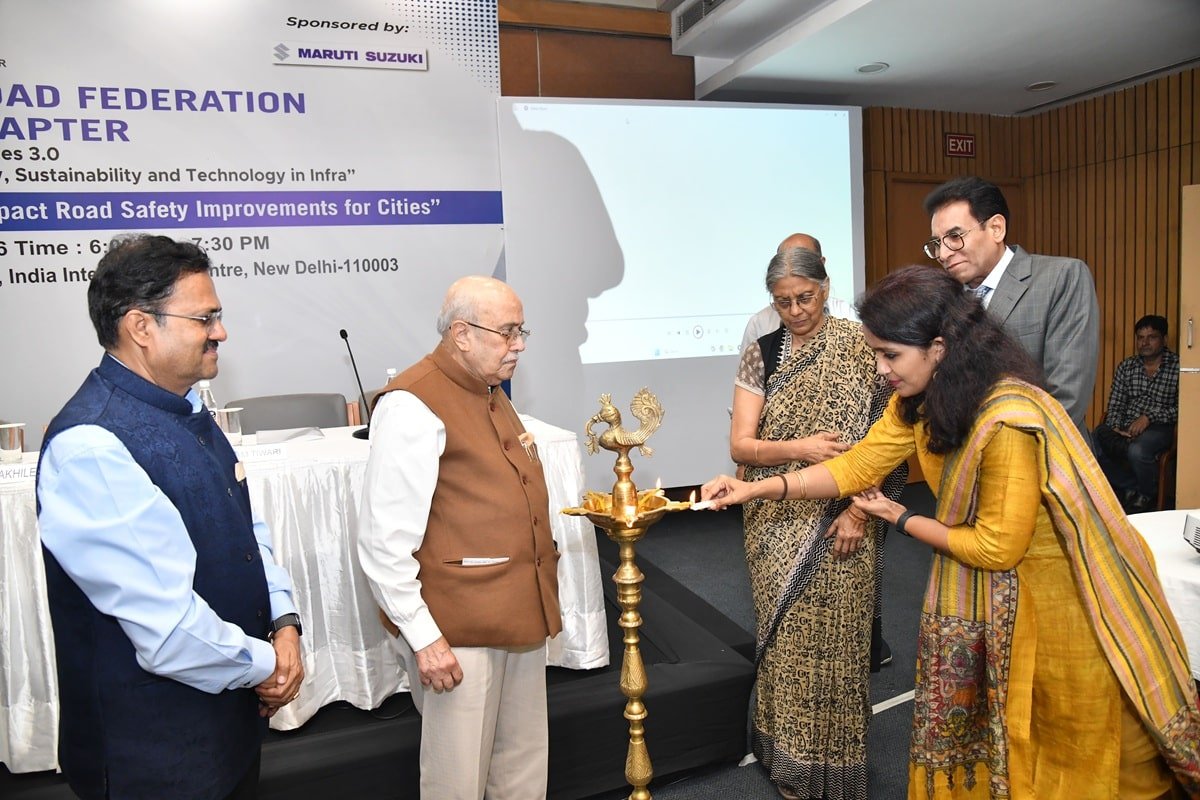
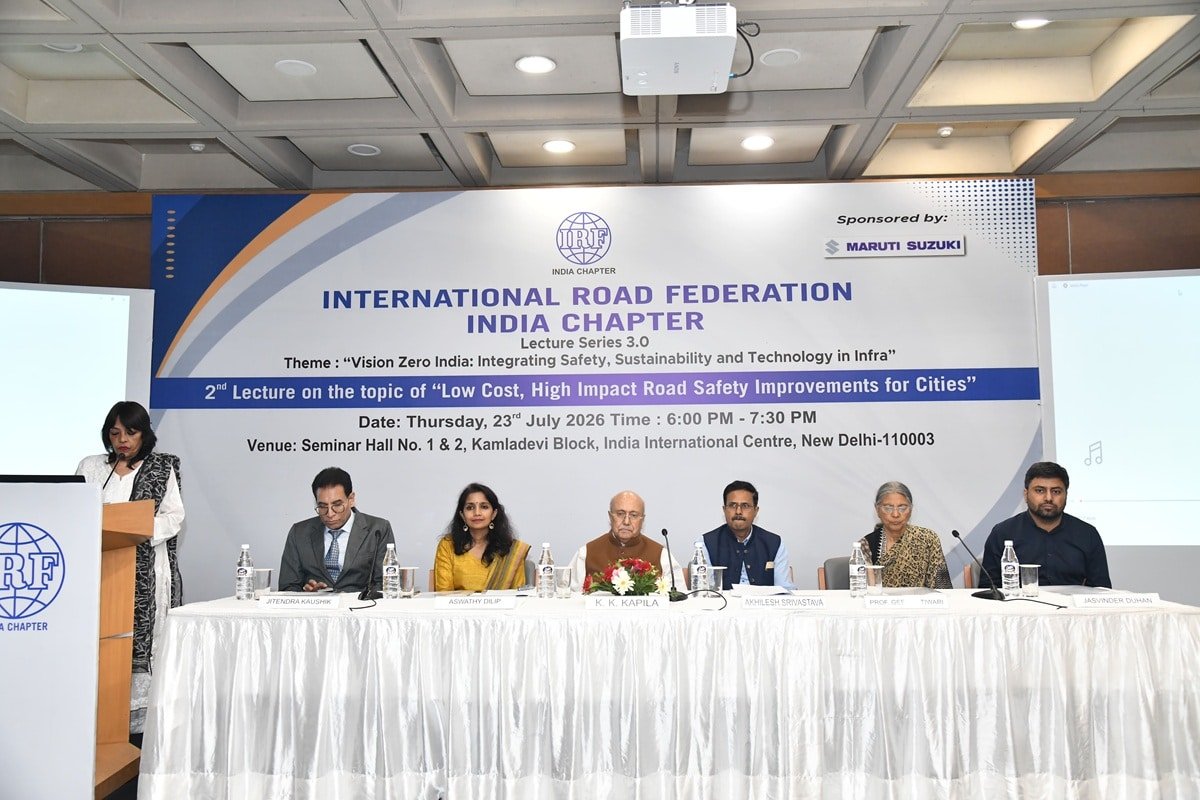
- This event has passed.
Lecture Series: 3.0 :2nd Lecture on the subject “Low Cost, High Impact Road Safety Improvements for Cities”
July 23 @ 6:00 pm - 7:30 pm
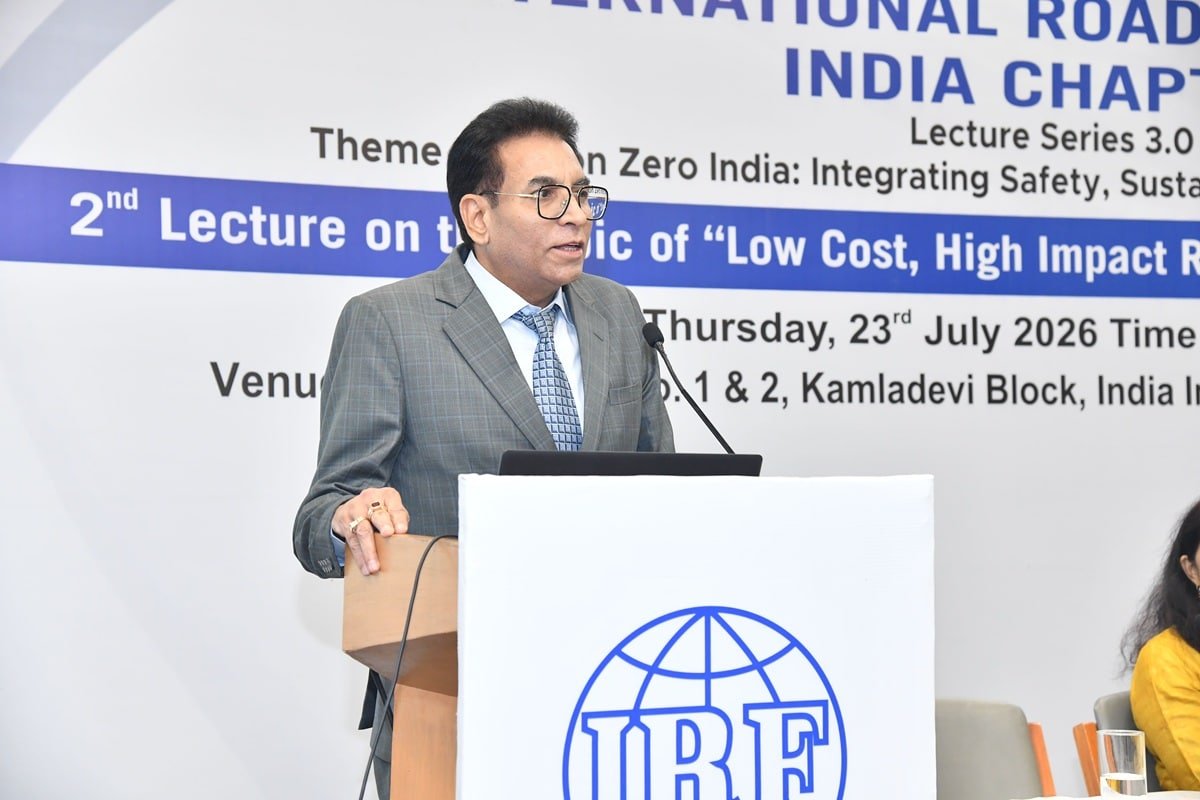
Welcome Address
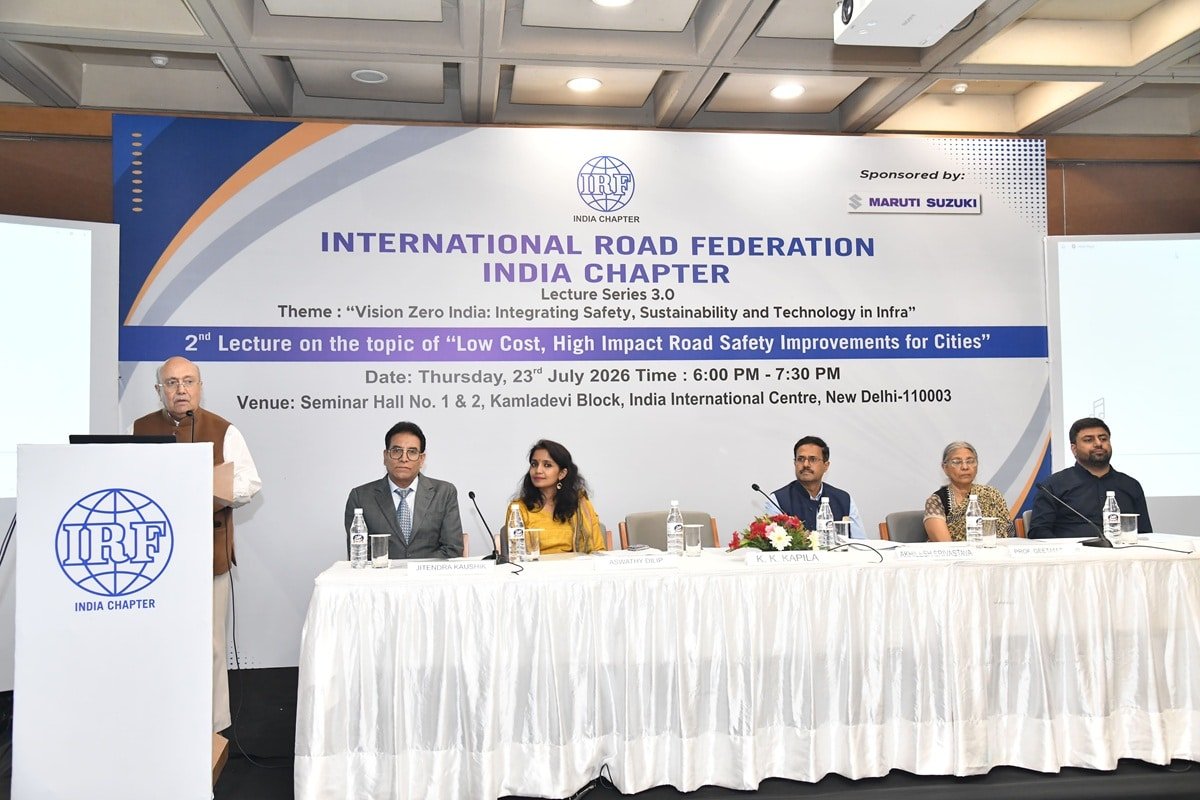
Speaker: Mr. K.K. Kapila
President Emeritus, International Road Federation | Founder-President, IRF India Chapter
Mr. K.K. Kapila welcomed the participants and emphasized that road safety is no longer dependent only on expensive infrastructure projects. He highlighted that low-cost, evidence-based engineering interventions such as traffic calming, safer intersections, improved lighting, and raised pedestrian crossings can significantly reduce road crashes and fatalities. He stressed that India’s road safety challenge requires stronger institutional coordination, better enforcement, reliable crash data, and political commitment to implement Vision Zero principles effectively.
Moderator’s Opening Remarks
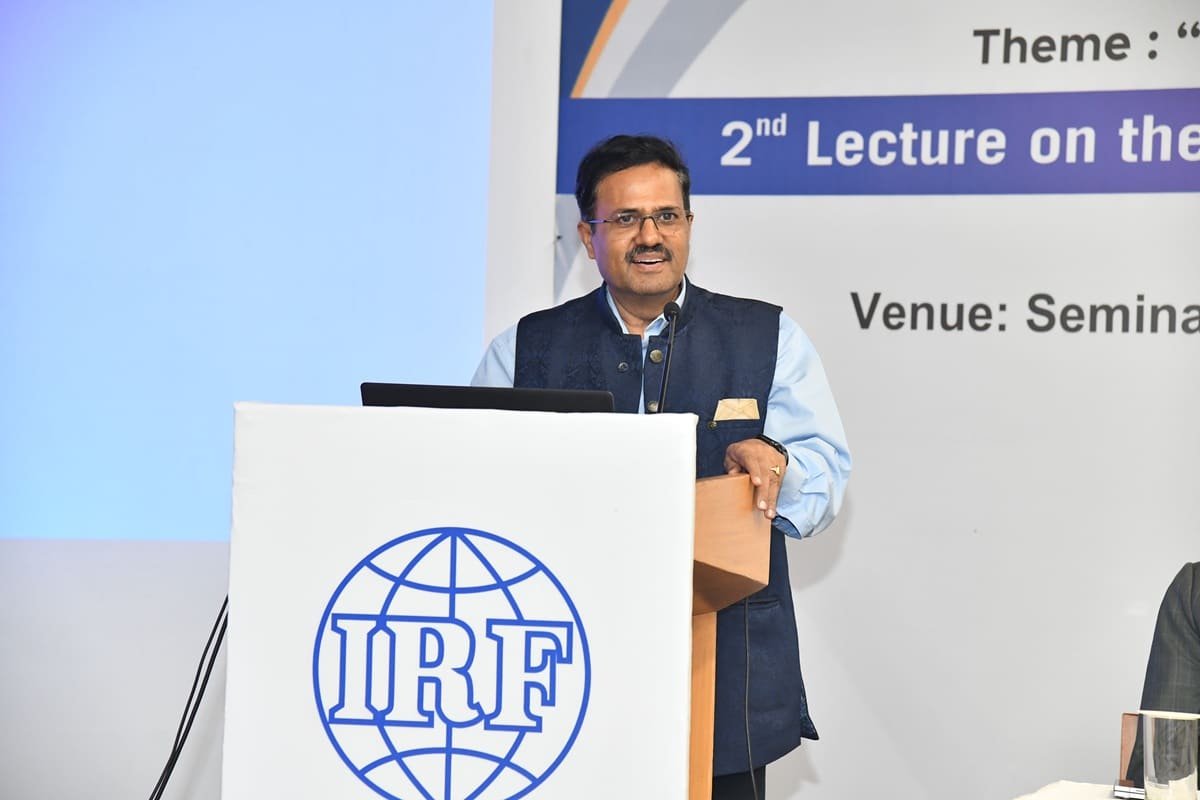
Speaker: Mr. Akhilesh Srivastava
President, ITS India Forum
Mr. Akhilesh Srivastava set the context by presenting alarming road safety statistics, including the high number of fatalities among young adults and school children. He emphasized that road safety is equally critical in cities and on highways and highlighted the importance of integrating technology, Artificial Intelligence (AI), Intelligent Transport Systems (ITS), and data-driven interventions with engineering solutions to reduce fatalities.
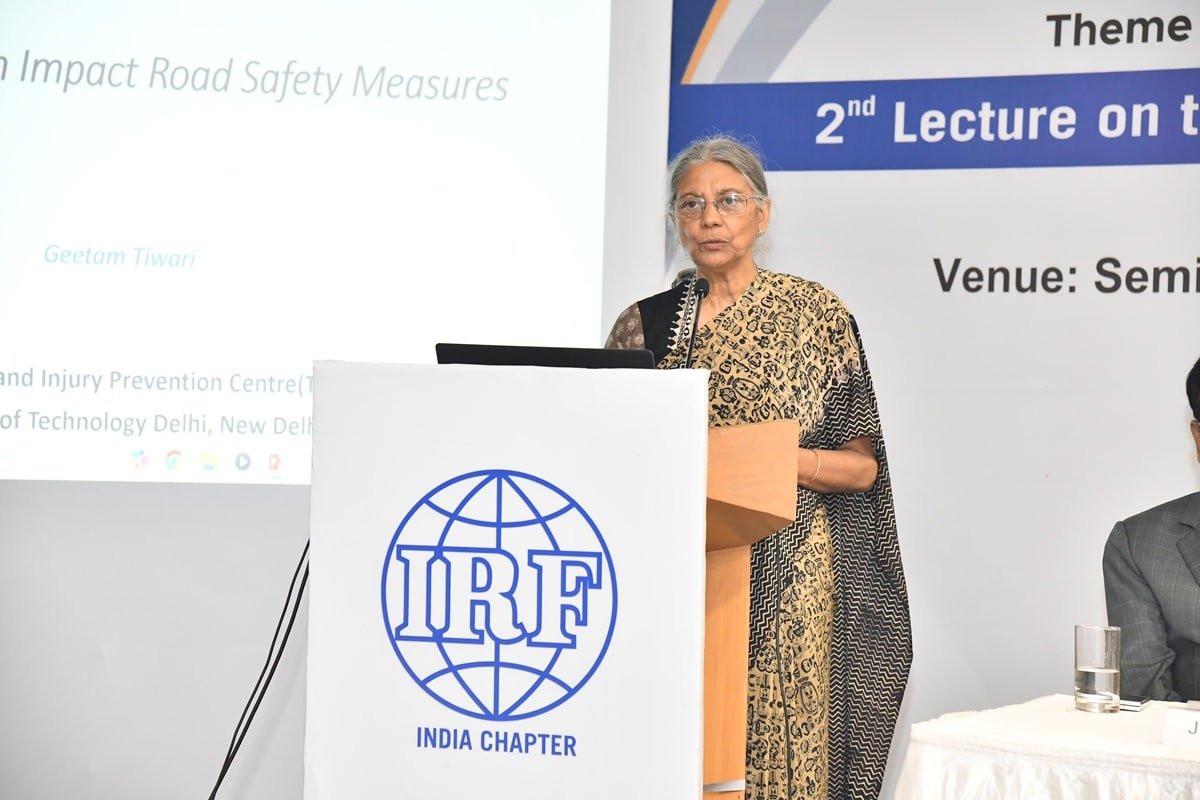
Speaker: Prof. Geetam Tiwari
Emeritus Professor & Former Chair Professor, TRIPP
Prof. Geetam Tiwari explained the Safe System Approach (Vision Zero), emphasizing that road systems should accommodate human error rather than expect perfect behavior. She stressed that 30 km/h urban speed limits, self-enforcing road designs, lane narrowing, roundabouts, raised crossings, traffic calming, and pedestrian-friendly infrastructure provide the highest safety benefits at relatively low cost. She also highlighted that infrastructure design has a greater impact on road safety than awareness campaigns alone.
Speaker: Mr. Jitendra Kaushik
CEO, Onnyx Electronisys Pvt. Ltd.
Mr. Jitendra Kaushik showcased an AI-powered Green Corridor Solution that gives priority to ambulances by automatically coordinating traffic signals using GPS and AI without requiring new hardware. The system tracks emergency vehicles, dynamically changes traffic signals, alerts police during delays, and reduces ambulance response time. He also emphasized that smarter traffic signal management and intelligent enforcement can improve compliance while saving lives at minimal cost.
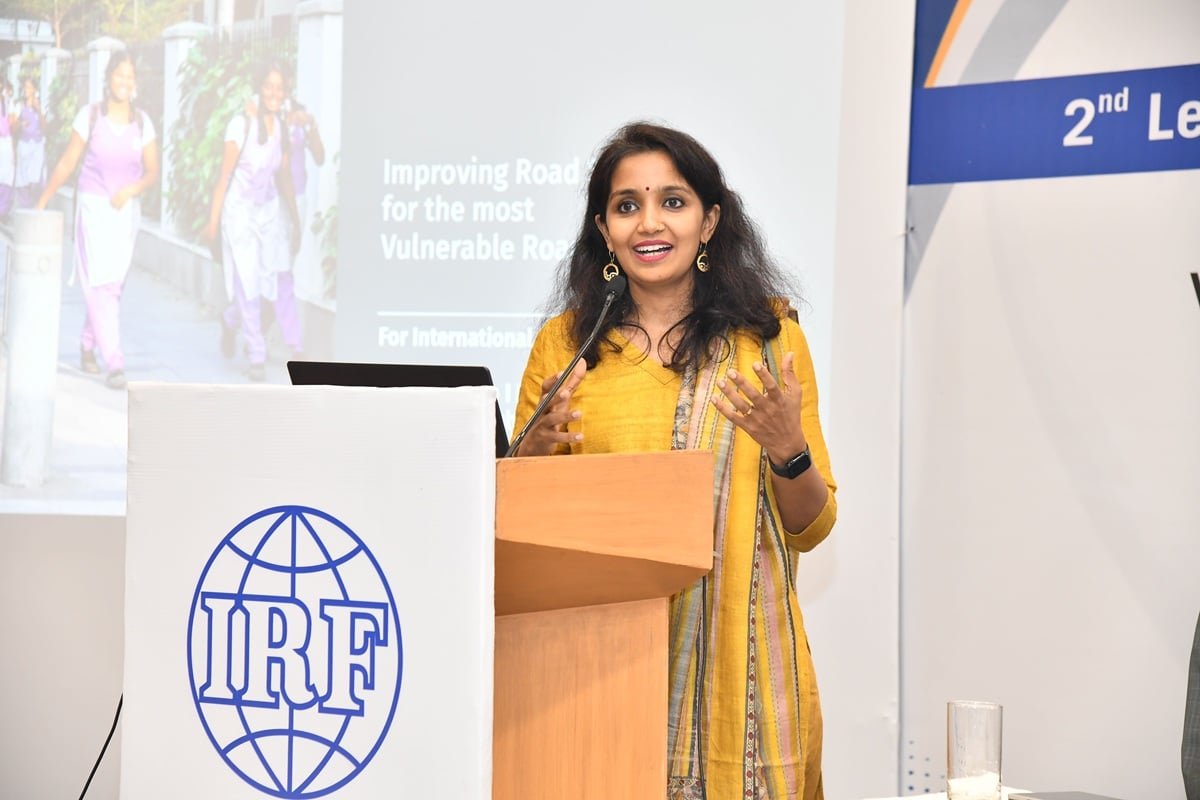
Speaker: Ms. Aswathy Dilip
Managing Director, ITDP India
Ms. Aswathy Dilip highlighted that many Indian streets remain unsafe because they prioritize vehicle movement over pedestrians and cyclists. She advocated for Healthy Streets featuring continuous footpaths, protected cycling lanes, safe crossings, refuge islands, narrower carriageways, better lighting, and traffic calming. She also showcased successful examples from Indian cities such as Pune, Chennai, Pimpri-Chinchwad, Srinagar, and Nagpur, demonstrating that safer streets can be achieved through practical, low-cost urban design interventions.
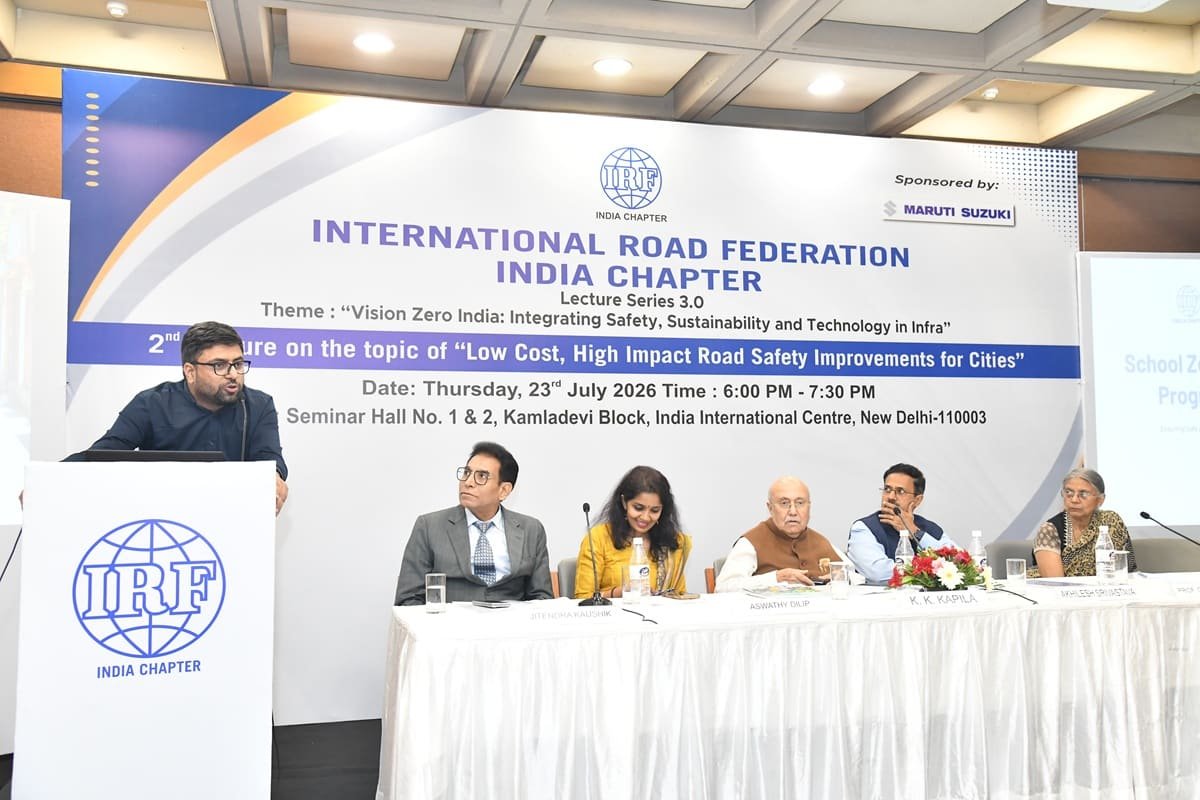
School Zone Safety: Low-Cost Interventions for Child Safety
Speaker: Mr. Jasvinder Duhan
Program Manager, International Road Federation (IRF) India Chapter
Mr. Jasvinder Duhan presented the IRF India Chapter’s School Zone Safety Programme, highlighting how simple, low-cost engineering measures can significantly improve child safety around schools. He explained that the Programme combines traffic calming measures, speed reduction, rumble strips, high-visibility road markings, school zone signage, pedestrian crossings, and stakeholder participation to create safer school environments. Drawing on IRF’s implementation experience, he emphasized that road safety education alone is insufficient unless children experience safe infrastructure in their daily journey. The Programme promotes collaboration among road authorities, traffic police, schools, parents, and local communities to build a long-term culture of road safety, with pilot projects demonstrating an expected 40–50% reduction in school zone crashes and fatalities.
Overall Discussion Summary
The panel unanimously agreed that achieving Vision Zero requires shifting from expensive infrastructure projects to cost-effective, evidence-based engineering, AI-enabled technologies, and people-centric street design. The discussion emphasized reducing vehicle speeds, protecting vulnerable road users, improving emergency response systems, strengthening enforcement, and promoting collaboration among government agencies to create safer and more sustainable cities.
Presentation by :
Photogallery